
Past Projects
SUBLIME
SUBLIME, which stands for Subdata selection with Big Data and Linear models for Mega dimensions, is a project focused on implementing and analysing various algorithms that extract small, informative subsets from massive datasets while preserving the accuracy of linear models.
In this project, we analysed and optimally implemented subdata selection algorithms such as CLASS, IBOSS and SRHT as an R package, which can be found on our GitHub website. We also came up with algorithms of CLEAR and CLASS-SRHT, which are particularly useful for a specific class of datasets.
This project won the Best Project Award in Delta Expo 2026.
SPARC
SPARC, which stands for Sparse Regression Codes for Erasure Queue Channels, is a project that utilises concepts from Information Theory, Probability, and Stochastic Processes to achieve results regarding Erasure/Gaussian Queue channels and verify them through simulations.
SMAC
SMAC, which stands for State Space Modelling And Control theory, explored safe motion planning for autonomous robots using modern optimisation and control techniques.
A layered planning-and-control framework based on ADMM was combined with Control Barrier Functions to guarantee safe navigation around obstacles. Simulations showed that Higher Order Control Barrier Functions reduced collision probability by 31% compared to the baseline approach.
Axify
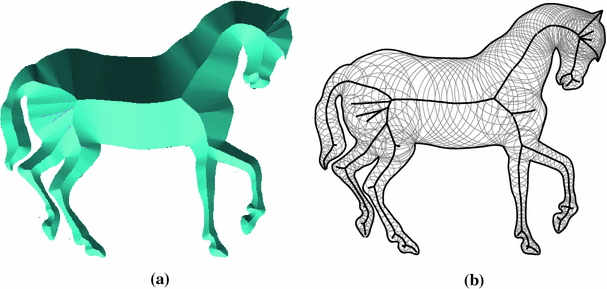
The goal of this project was to construct an accurate topological representation of an image that can be used for image recognition and segmentation and to leverage this representation to compress image files for efficient storage. We used techniques like Medial Axis and Delta Medial Axis transforms to find the skeleton of an image and then use it for reconstruction. We also explored ways to enhance image compression ratio and find a better heuristic for the delta parameter. This project won the Best Software Project Award in CFI Open House 2025.
Dynamix
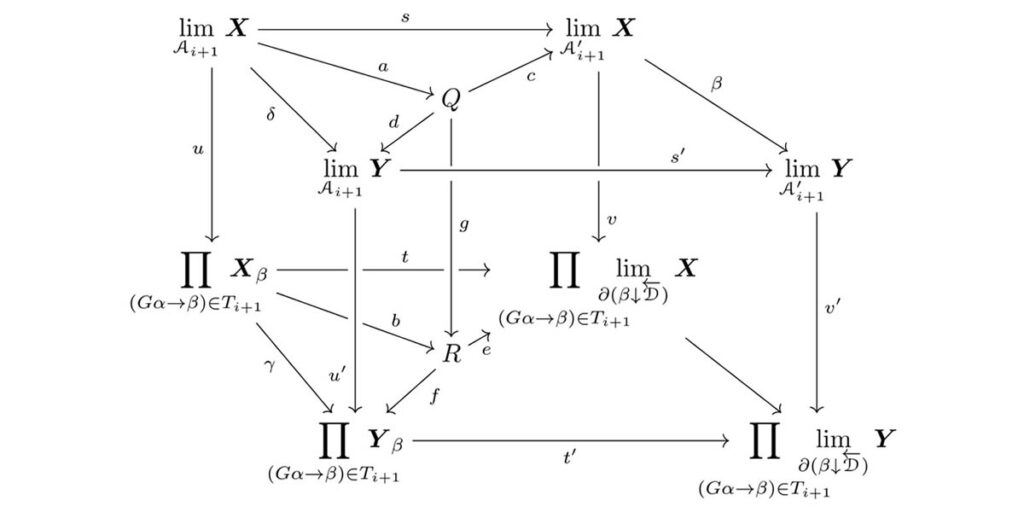
This project involves learning more about Dynamical Systems through the concept of Category Theory. Category theory is the study of mathematical structures and their relations. In this project we used Category theory to analyze various dynamical systems. We applied categorical concepts to systems like Epidemic Modelling and Chemical Kinetics. We also applied Category theory to develop models for novel ideas such as the Satisfiability Problem, Electric Network Composition and Categorical Query Language.
Conceptualization and Design of Permutation Puzzles
This project involves study and investigation of design and solutions of Permutation Puzzles. The primary motivation stems from Cayley’s theorem of Group Theory which states that every group is isomorphic to a Permutation Group. Hence, by analyzing Permutation Puzzles we aimed at developing a generalized mathematical framework for implementation of novel mechanical puzzle structures akin to the well-known Rubik’s Cube, 15-Puzzle etc.
DiceForge
DiceForge is an open source library written in C++ from scratch with the aim of providing fast, efficient, easy to use methods similar to those of python’s random library for pseudo-random number generation , discrete and continuous probability distribution sampling and fitting experimental data to those distributions. DiceForge is on average 8 times faster than C++’s standard library and 400 times faster than python’s random library. The pseudo-random number generators were tested rigorously using a series of Dieharder tests.
Heuristic Tourist
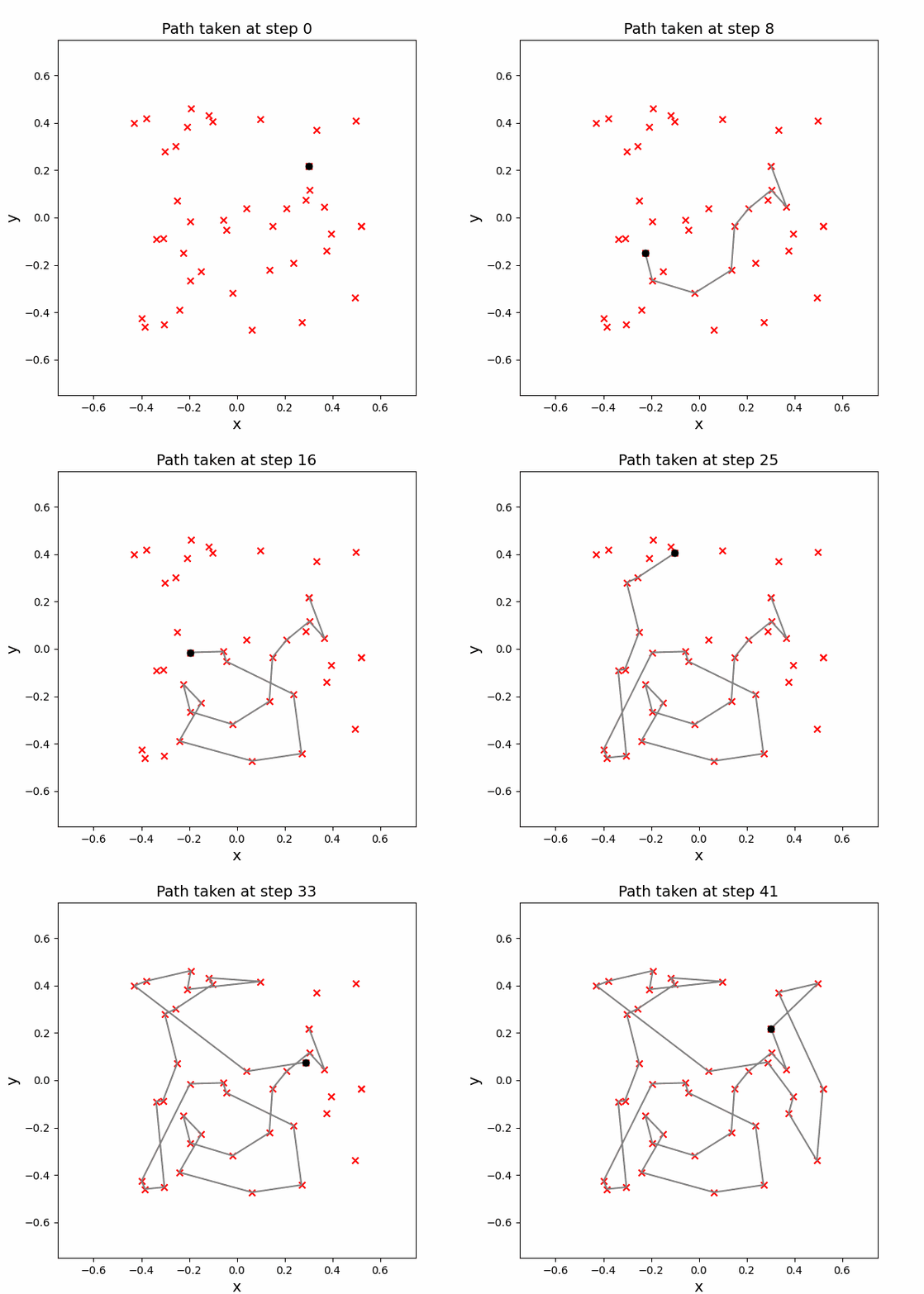
Under this project we solved the very famous Travelling Salesman Problem using a deterministic heuristical algorithm which runs in O(nlogn) called Polar optimisation. The algorithm initially focuses on minimising angular distances and then later improves the convexity of the figure. It outperforms as well as runs much faster than traditional approximation algorithms like the simulated annealing.
Chaos Playground
Pursuit-evasion games are strategic contests between two or more entities, where one side (the pursuer) aims to capture or reach a target, while the other side (the evader) seeks to avoid capture or elude pursuit. These games are commonly found in military, law, gaming, and even biological contexts, showcasing complex tactics, resource management, and decision-making under uncertainty. They often involve dynamic interactions and can be analyzed using game theory and optimization techniques.
We analyze these games using nonlinear control mechanisms like Model Predictive Control (MPC), Linear Quadratic Regulator (LQR) and Reinforcement Learning (RL).