
Current Projects

MAPS
- MAPS, which stands for Multi Agent Planner in Stochastics, is an exploratory and implementation project that delves into the principles and applications of Stochastic Control Theory using Control Barrier Functions.
- This area of study is crucial for a wide range of practical applications, particularly in systems where multiple autonomous agents must coordinate safely under real-world noise, uncertainty, and dynamic environmental conditions.
- Stochastic Control Barrier Functions are powerful mathematical tools used in safety-critical control theory that enable us to guarantee collision-free navigation for multi-agent systems evolving under uncertainty, making them especially well-suited for applications like autonomous robotics, drone swarm coordination, traffic management, and warehouse automation.
Project Leads

Nihal Pinisetti
“Loaf is that constant in the integration of life.”

Hafiz Rahman Elikkottil
“Sticking to the safe zone, but life keeps throwing disturbances”
Project Members

Pragadish Arjun V
“Life is like matrices, I don’t get it”

Prajith Saravanan
“I am 95% confident that anyone who claims to truly understand statistics is lying to you, and the remaining 5% are lying to themselves.“

Ritvik Duvvuri
“You are the unique variable that makes the equation of life infinitely more interesting, without you, the math just doesn’t add up“
Mahadevan Sanju
“Life is complex, real problems often require imaginative solutions”
Dyutimaan Krit
“Every topological space is secretly a torus in 7 dimensions. The proof is left as an exercise for the reader”
TACTICS
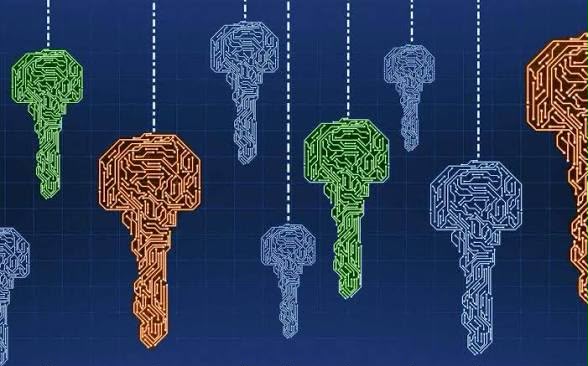
- TACTICS, which stands for Time space Analysis of Collisions and Trap door Inversions in Cryptographic Systems is a project which dives into analyzing the tradeoffs between time and space used and how to find and prove optimal bounds for the same
- It dives deep into theoretical cryptography, probability and discrete math to uncover the best algorithms to find collisions in hash functions.
Project Leads

Aditya
“Act like your younger self is watching”

Pulkit
“Life is like a good maths problem, it’s difficult to see the things that matter the most.”
Project Members

Navaneeith TS
“Let’s assume we know nothing, which is a reasonable approximation.”

Harshith
“Would you rather start today or tomorrow? I would start day after tomorrow.”

Pranav TR
“Don’t be afraid to experiment in life, sometimes you need to differentiate to find an integral”.
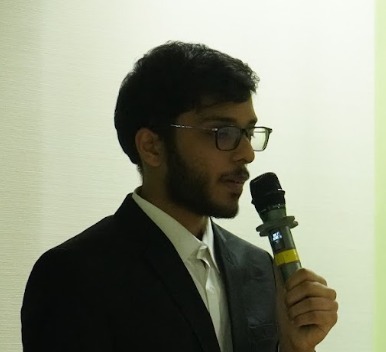
Pranav Gopi
“Life is like math, if it’s too easy something is wrong.”

OASIS
- OASIS, which stands for Optimal and robust Approaches for Sparse, Invariant and Subdata selection methods, is a project that explores techniques at the intersection of robust statistics, high-dimensional analysis, and computational efficiency.
- As modern datasets grow increasingly massive, cluttered with thousands of irrelevant variables and prone to data corruption, traditional algorithms quickly become skewed or computationally overwhelmed.
- The aim of the project is to address this challenge through smart subdata selection methods focused on three core pillars: robustness, variable reduction and efficiency.
- To achieve high-speed performance while remaining user-friendly, the project is implemented majorly in R and C++, leveraging OpenMP for multi-threaded parallel processing.
Project Leads

Lahari
“Living somewhere between convergence and divergence.”

Mohit Rathi
“What did Pav Bhaji say to E[X]? lol iykyk.”
Project Members

Harigovind Rayirath
“You know what’s cooler than magic? ….. Math!!“

Kailash Anand
“Hopefully one day our contributions to mankind will have p<0.05”

Pranav Tej
“Ignore the noise. Zoom out…your overall slope is still positive.“

Shreyas Krishnan
“Life is a differential equation. You can have multiple solutions depending on the constants you choose”

ASCENT
- ASCENT, which stands for Adaptive Spline Computation for Estimating Non-stationary Timeseries, is a project that investigates the dynamics of non stationary time series by integrating spline theory with spectral analysis by deploying TKANs.
- TKAN is a new architecture based on Kolmogorov-Arnold Networks used for time-series forecasting.
- We propose algorithms/heuristics to update the parameters of TKAN, implement and test them for improving prediction accuracy while forecasting non-stationary time series data.
Project Leads

Taarun
“Mathematics is the art of generalising stuff.”

Anirudh N
“To infinity and beyond limits.“
Project Members

Chethan
“Finding Structure where others see noise”
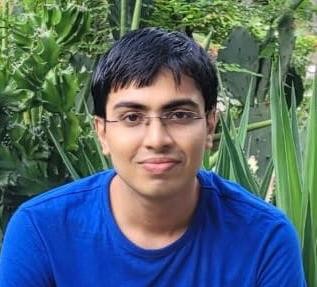
Srihari
“You’re exactly where the algorithm wanted you.“

Naitik
“A good bet can still lose and a bad bet can still win. Life is less about finding the right answer than updating the one you have.“

Yusuf
“Life is complex, real problems often require imaginative solutions”
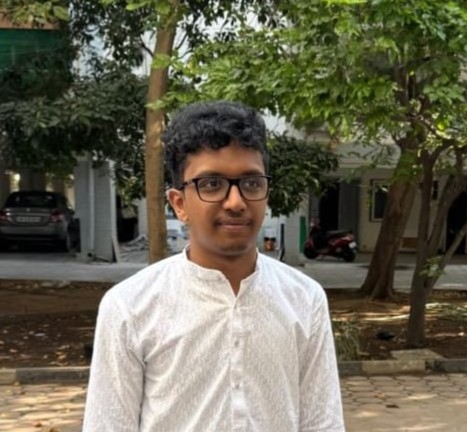
Arshad
“Life is just brownian motion.”

Keerthivasaan
“Extrapolating the future from the noise of the past.”